
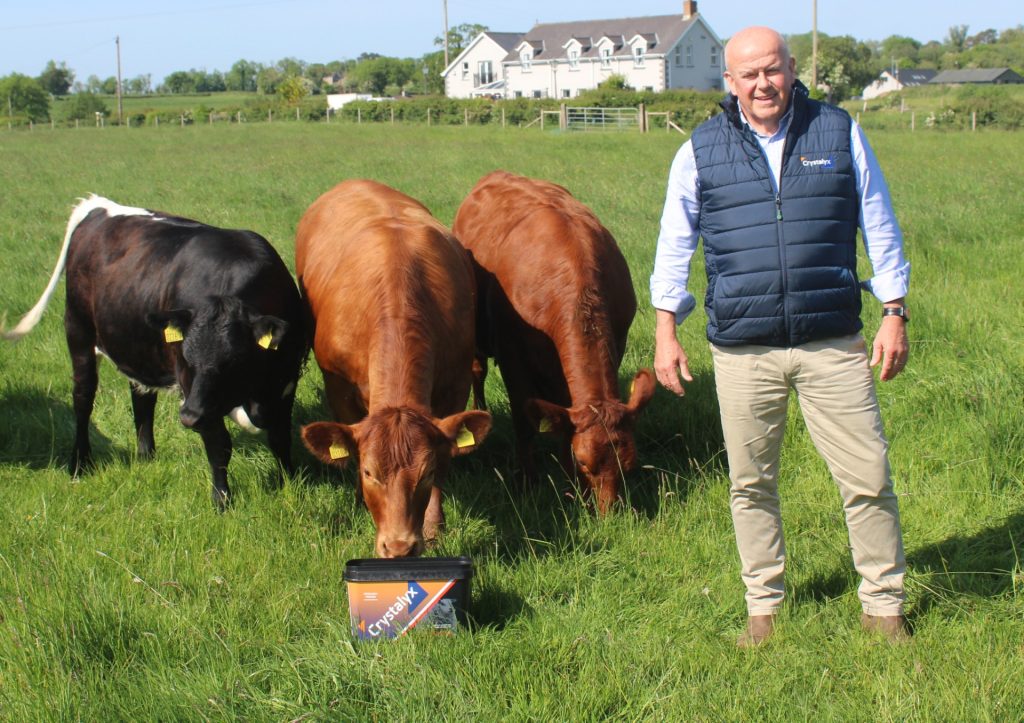
The recent spell of hot weather followed by showery conditions has created ideal circumstances for a rapid increase in fly populations across grazing systems. While flies are often regarded as little more than a nuisance, they can play a significant role in the spread of summer mastitis – a disease that continues to cause serious losses in dry cows, in-calf heifers and youngstock.
According to David Morgan, Crystalyx Ireland, weather patterns can have a significant influence on fly activity and, consequently, summer mastitis risk.
“Summer mastitis predominantly occurs during the warm summer months with cattle out at pasture. The disease changes little over the years, affecting the same farms year after year and often just certain fields on those farms.”
Understanding Summer Mastitis
Summer mastitis is a seasonal disease that primarily affects dry cows and replacement heifers grazing at pasture. Although cases can occur across a wide range of systems, the disease is often associated with specific high-risk grazing areas.
One of the challenges is that dry cows and in-calf heifers are often monitored less frequently than milking cows, meaning infections can become advanced before they are detected.
The consequences can be severe. In many cases, the affected quarter is permanently damaged, reducing future milk production and, in some instances, leading to the loss of the animal.
As David Morgan explains:
“Very few affected quarters will recover, so any treatment is largely salvage. The main goal should always be to avoid the disease or minimise its incidence wherever possible.”
How Flies Contribute to Summer Mastitis
Summer mastitis is closely linked to fly activity, particularly that of the sheep head fly (Hydrotaea irritans).
The fly’s lifecycle and behaviour help explain why outbreaks are often concentrated in particular locations.
“These flies live in bushes and trees and can only fly during mild, damp, humid conditions and low wind speeds. Cases therefore tend to be associated with problem fields next to woods and high hedges.”
Persistent fly activity around the teat causes irritation, encouraging animals to kick and stamp. This irritation can damage the teat end and create an opportunity for bacteria to enter the teat canal.
Once infection develops, the affected quarter – and sometimes the entire udder – becomes swollen, painful and inflamed. A yellow, foul-smelling discharge is commonly present, attracting further flies and increasing the risk of disease spread within the group.
Why Prevention Remains the Best Strategy
Where irreversible tissue damage can occur quickly, prevention remains the most effective approach to managing summer mastitis.
Practical measures include:
- Avoiding high-risk grazing areas where fly populations are known to be problematic.
- Rotating susceptible stock away from fields bordered by woodland or dense hedgerows.
- Using approved fly-control products such as pour-ons and fly tags.
- Monitoring dry cows and replacement heifers regularly throughout the grazing season.
While these approaches can significantly reduce risk, no single method provides complete protection.
Supporting Fly Control Through Nutrition
An integrated fly-management programme can also include nutritional strategies designed to make cattle less attractive to nuisance insects.
Garlic supplementation has long been used by livestock producers during the grazing season. The naturally occurring sulphur compounds found in garlic are released through the skin and natural body secretions after consumption, creating an environment that many flies and biting insects find less appealing.
This is the principle behind Crystalyx Garlyx, which contains concentrated garlic extract in a weather-resistant free-access lick. By providing a consistent intake throughout the grazing season, Crystalyx Garlyx can complement other fly-control measures already in place on farm.
For farms that regularly experience high fly pressure, particularly where summer mastitis has been an issue historically, garlic supplementation may provide an additional layer of support as part of a wider fly-management strategy.
Preparing for Peak Fly Season
With warm temperatures and intermittent rainfall creating favourable conditions for insect activity, now is an ideal time to review fly-control plans for dry cows and replacement heifers.
Summer mastitis continues to be a costly and frustrating disease, but understanding the relationship between weather, fly populations and infection risk can help producers take proactive steps to protect vulnerable stock.
For farms looking to strengthen their fly-control programme this grazing season, nutritional support through Crystalyx Garlyx can form part of an integrated approach alongside grazing management, stock monitoring and conventional fly-control products.
