
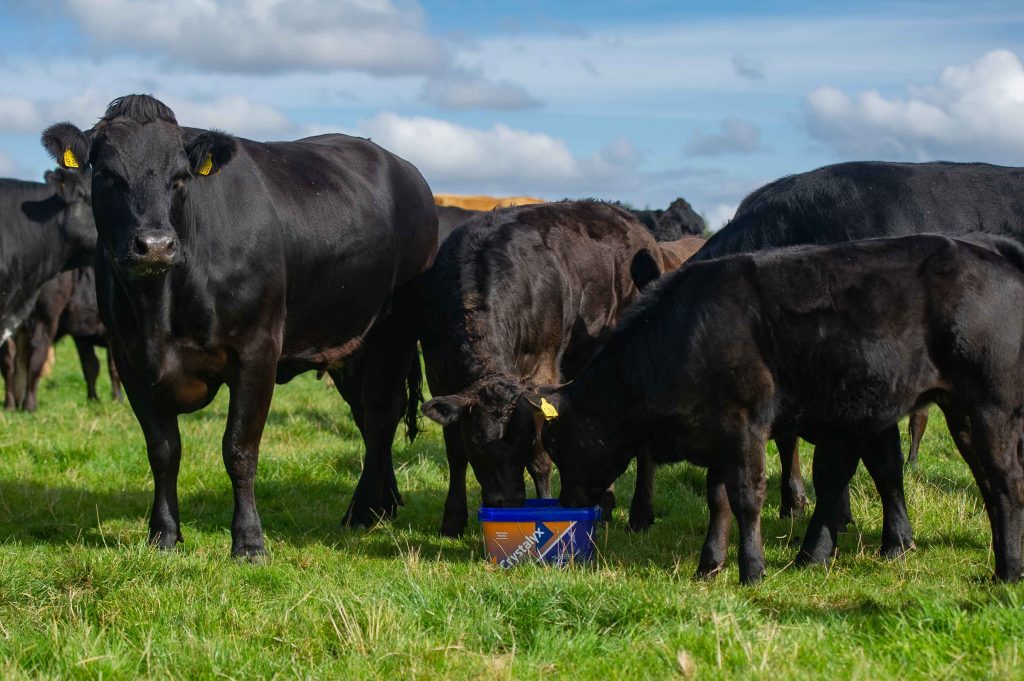
With grazing now well underway, farmers are being warned that relying on grass alone without checking what nutrition it provides risks leaving livestock short of key mineral and trace element needs.
Dr Richard Wynn, technical lead at Fevara, says farmers need to take a 360-degree view of spring nutrition to protect growth, fertility and performance.
“Spring grazing is often seen as the point where systems become simpler, but that is not always the case,” he says.
“When livestock are out at grass, it is easy to focus only on what is in front of the animal. But with such changeable seasons and weather patterns, farmers need to look forwards, backwards and sideways when planning nutrition.”
Look ahead to match nutrition to performance goals
Dr Wynn advises farmers to start by looking forwards at their production goals, whether that is getting lambs to market earlier, supporting lactating cows or ewes, or maintaining growth rates in youngstock.
“Feeding decisions should be linked to those targets,” he says.
“The right approach will depend on what the system needs to achieve and where the main nutritional pressures are.”
Look back to where nutrition starts
He encourages farmers to look backwards at soil and forage analysis results to understand what grazing platforms are providing and where extra support may be needed, before deciding what to supplement.
“In reality, forage rarely provides everything livestock need, particularly during spring when grass growth can be patchy and animals are still adjusting from winter feed,” he says.
“We’ve carried out research across more than 350 silage samples and found frequent shortfalls in copper, selenium, iodine and cobalt.
“Macro minerals like magnesium, calcium and phosphorus can’t be forgotten either – in fluctuating spring conditions, lactating animals are at higher risk of hypomagnesaemia, or staggers, due to low magnesium levels in the grass.”
Look sideways – consider wider input pressures and market conditions
Finally, Dr Wynn says farmers should look sideways at wider pressures affecting management decisions, including fertiliser availability, red diesel costs and feed prices.
“With rising input costs, farmers are understandably focused on getting more from less.
“It’s therefore even more important to maximise the nutrients already in the soil, monitor grazing carefully and make supplementation decisions based on current conditions rather than habit.”
Why a strategic approach to mineral licks and feed tub supplementation is key
Dr Wynn adds recommends that farmers should use supplementation strategically, rather than taking a one-size-fits-all approach.
“Different farms will require different levels of support – some may require creep feed or concentrates to support growth and finishing,” he explains.
“Others may benefit from mineral buckets like Crystalyx Cattle Booster, where broader macro and micro mineral support is needed.
“Where known deficiencies in trace elements exist, boluses such as Tracesure Advanced can be considered.
“The key point is choosing the right solution for your system, livestock, the forage available and the farm’s wider goals.”
Five steps for 360-degree spring nutrition
- Look forwards at production targets, including growth rates, fertility, milk output or finishing dates.
- Look backwards at what soil and forage are actually providing, to establish where nutritional gaps may lie.
- Look sideways at the other influencing factors on farming systems and how to maximise available nutrients under current conditions.
- Check key trace elements and macro minerals, particularly copper, selenium, iodine, cobalt and magnesium.
- Use supplementation strategically, selecting creep feed, concentrates, boluses or mineral buckets according to the needs of the system.
Support grazing performance with Crystalyx Cattle Booster
For beef and dairy systems where wider macro and micro mineral support is needed, Crystalyx Cattle Booster can help farmers make better use of available forage while supporting livestock performance.
Designed as a low-moisture feed tub, Cattle Booster provides a practical way to supplement cattle at grass with key minerals, trace elements and vitamins alongside grazed forage or other feeds.
Independent research trials have linked Cattle Booster to improved forage intake and digestibility, helping support daily liveweight gain, fertility, milk performance and overall herd health. It can be particularly useful where farmers are looking to:
- Support performance from forage-based diets
- Encourage stable rumen function, helping to improve forage intake and digestibility
- Reduce the risk of acidosis
- Promote growth rates in youngstock and support heifers reaching bulling weight
- Support fertility and immunity in breeding cattle
Maintain body condition in early lactation to support milk production
Find out about Crystalyx Cattle Booster
