
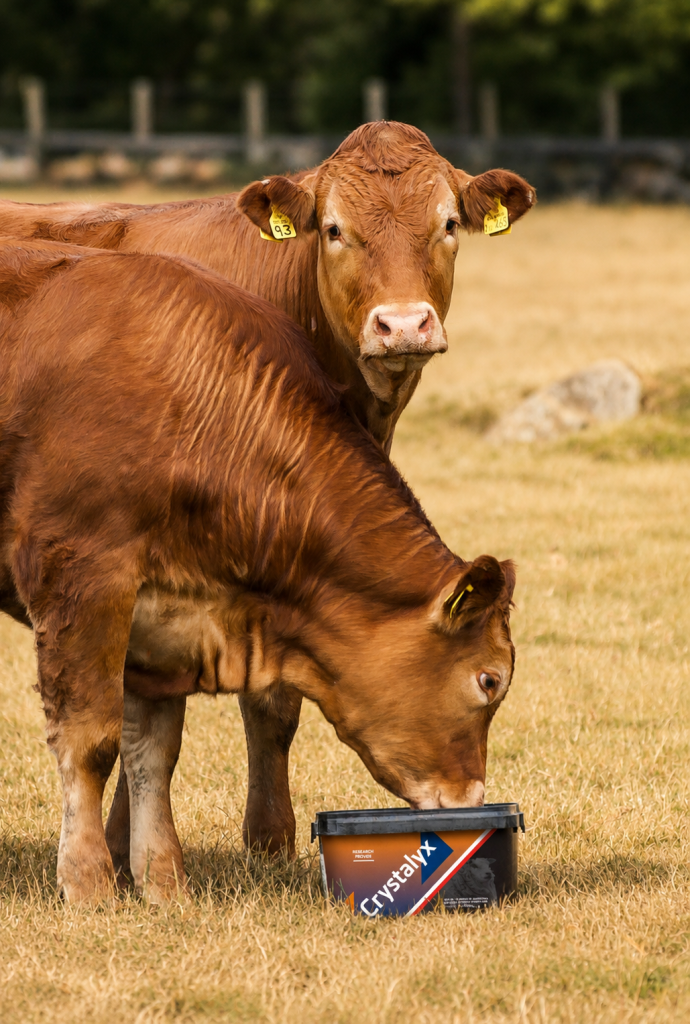
Hot, dry weather can leave cattle and sheep with less to graze, just as heat stress and fly irritation disrupt feeding behaviour. With pasture scorched and providing less nutrition across much of the UK, now is an ideal time to review both fly-control measures and summer rations, helping maintain grazing efficiency and livestock performance.
In this article you’ll learn
- How hot weather can affect grazing and livestock performance
- Why forage and the basal ration should be reviewed first
- How Crystalyx Garlyx supports livestock when grass is limited or low in nutrients
- Why concentrated garlic is useful during periods of increased insect activity
The nutritional challenge
AHDB’s Forage for Knowledge grass-monitoring alerts from July 2026 show average grass growth was down 30% compared with the same time last year. It also notes that dry soils and a lack of moisture has stopped growth in some areas, with swards beginning to struggle above 25°C and growth stopping altogether at 30°C. The advice states that even after rain arrives, grass could take several weeks to recover, and many farms may therefore need to rely heavily on supplementary feed for at least another six weeks.
View the latest AHDB grass information.
Cattle and sheep can become less active in hot weather, seeking out shade and altering when and where they graze. This can impact the amount they eat, reducing their intake at precisely at the point when their bodies are under more strain.
When intakes fall and pasture no longer supplies the nutrition it did a few weeks earlier, the effects can include:
- Lower milk yield
- Reduced liveweight gain
- Loss of body condition
- Knock-on effects for fertility
- Pressure on health and performance
- Reduced farm profitability
These effects may last beyond the immediate hot spell and can affect the health and future performance of unborn calves, so acting early can help protect longer-term herd and flock performance.
Review forage and the basal ration first
As a first port of call, Dr Richard Wynn, head of research and development at Fevara, advises farmers to reassess the basal ration and replace the nutrition that declining pasture is no longer providing.
Start by considering:
- How much grass is available
- Whether grass growth is meeting livestock demand
- Whether the nutrient profile of summer forage has changed
- Which groups are under the greatest nutritional pressure
- How much silage or alternative forage may be required
- What using silage now will mean for winter stocks
Some farmers may consider bringing cattle inside where suitable housing and ventilation are available. If this is not practical, stock will likely remain outside, where access to clean water and shade will be essential.
In either situation, additional forage, most commonly silage, may be needed to replace missing and scorched pasture. However, this draws on winter stocks earlier than planned.
Where silage is required, Dr Wynn advises using the best-quality forage available. The rumen produces heat as feed is fermented, so poorer-quality, harder-to-digest material can add to the challenge during hot weather. Better-quality forage can support more effective digestion and help animals to retain more value from what they eat.
Depending on the ration, farmers may also consider rumen buffers, protected fats or live yeast to support the rumen environment and the microbes responsible for breaking down fibre.
More than fly control: How Crystalyx Garlyx supports summer nutrition
Once the base ration has been addressed, targeted supplementation can help fill remaining gaps.
Crystalyx Garlyx is an ideal summer grazing solution. Primarily designed to maximise animal performance by stimulating forage intake and digestion, it helps cattle and sheep make more of scorched, limited or low-nutrient grass, while its high concentration of natural garlic is an added benefit to help ward off flies and biting insects.
Crystalyx Garlyx contains:
- A full complement of vitamins, minerals and trace elements to balance deficiencies in summer grass
- Concentrated natural garlic to create an invisible barrier around the animal, making it less attractive to flies and biting insects
- High levels of zinc to maintain skin condition and integrity
Its free-access format allows animals to visit the lick as and when they choose, which may be useful when heat or insect irritation makes grazing behaviour and essential nutrient intake less predictable.
Used alongside an adequate base ration, Garlyx can:
- Support forage intake and digestibility
- Help livestock make more effective use of available forage
- Supply nutrients that may be lacking amid poor summer grazing conditions
- Provide an additional layer of support within a wider fly-control programme
Garlyx provides an additional summer grazing benefit
Flies and biting insects can become prevalent at this time of year, especially when prolonged warm weather is followed by bouts of rain and humid conditions.
Flies are more than just an irritation. Restless livestock may spend more time kicking, stamping or trying to avoid insect bites and less time grazing. Certain flies can also contribute to disease risk and bacterial infection.
The sheep head fly, for example, is closely linked with the spread of summer mastitis in grazing cattle, particularly dry cows and replacement heifers. Farms with a history of summer mastitis, or with stock grazing close to woodland, water sources and dense hedgerows, may need to pay particular attention to fly activity.
The concentration of natural garlic in Garlyx is gradually released through the animal’s skin, creating a barrier that insects find repellent. It can complement other seasonal fly-control methods, while its weather-resistant format supports consistent vitamin, mineral and trace element intake throughout the grazing period.
Garlyx should form part of a wider summer management plan alongside adequate forage, clean water, shade, ventilation, regular stock monitoring and approved measures such as pour-ons or fly tags.
Read more about summer mastitis, changing weather conditions and integrated fly control.
Evidence behind supplementary feeding
Dr Wynn reports that Crystalyx research has demonstrated improved forage digestibility across a range of forage qualities.
This may be particularly relevant when silage stocks are tight and where livestock need to make more effective use of poorer material. However, animals receiving good-quality forage can also benefit from targeted supplementation.
Dr Wynn’s tips to stay on top of summer nutrition:
- Review grass and forage availability.
- Correct the basal ration first
- Fill in the gaps by adding targeted supplementary nutrition such as feed licks, buffers and live yeast
- Monitor ongoing intake, body condition, grass growth and performance
How should Garlyx be fed?
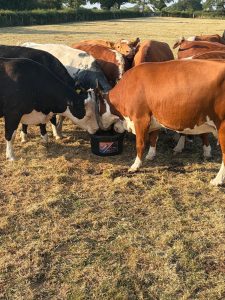
Crystalyx Garlyx is available in 22.5kg and 80kg formats. Expected daily intake is around 150–250g per cow and 40–60g per ewe.
- For larger groups, provide two 80kg tubs for up to 50 cattle or 100 sheep
- For smaller groups, use two 22.5kg tubs for up to 20 cattle or 40 sheep
- Always offer at least two tubs per group to reduce competition and bullying
For more information, see our feeding guidelines.
Act now to support summer livestock performance
Have a question? Ask the Crystalyx team
