When seasons swing from dry spells to wet autumns, it’s the knock-on effect that can catch you out. Lighter grass covers, inconsistent silage quality and dry matter, and mineral deficiencies all start quietly impacting performance
A forage-first approach keeps costs anchored, but it still needs a safety net.
On mixed farms, that often comes down to two practical habits: pro-active grazing management and strategic supplementation when forage quality dips or intakes vary.
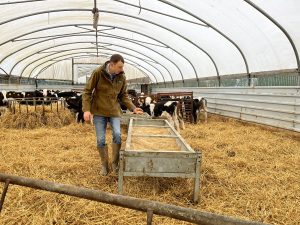
This is exactly the thinking at Bockleton Court near Ludlow, where fourth-generation farmer Matt Price runs 600 Mules and Clun Forest ewes alongside 750 cattle, a mix of Aberdeen-Angus, Limousin and British Blues, across 240 hectares of owned and rented land, plus additional grass keeps.
The grass-first principle
Matt’s system is built around getting livestock thriving on grazed forage for as long as conditions allow.
His key mindset is:
- Keeping concentrate use targeted, not routine
- Building flexibility into grazing and winter feeding
- Using supplementation to fill gaps, not replace forage
“If we can keep stock doing well without pushing a lot of concentrate, that’s where the margin is,” says Matt.
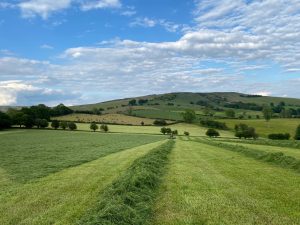
“Last summer’s grass covers were lighter than expected due to the dry spell, so careful grazing management has been essential.
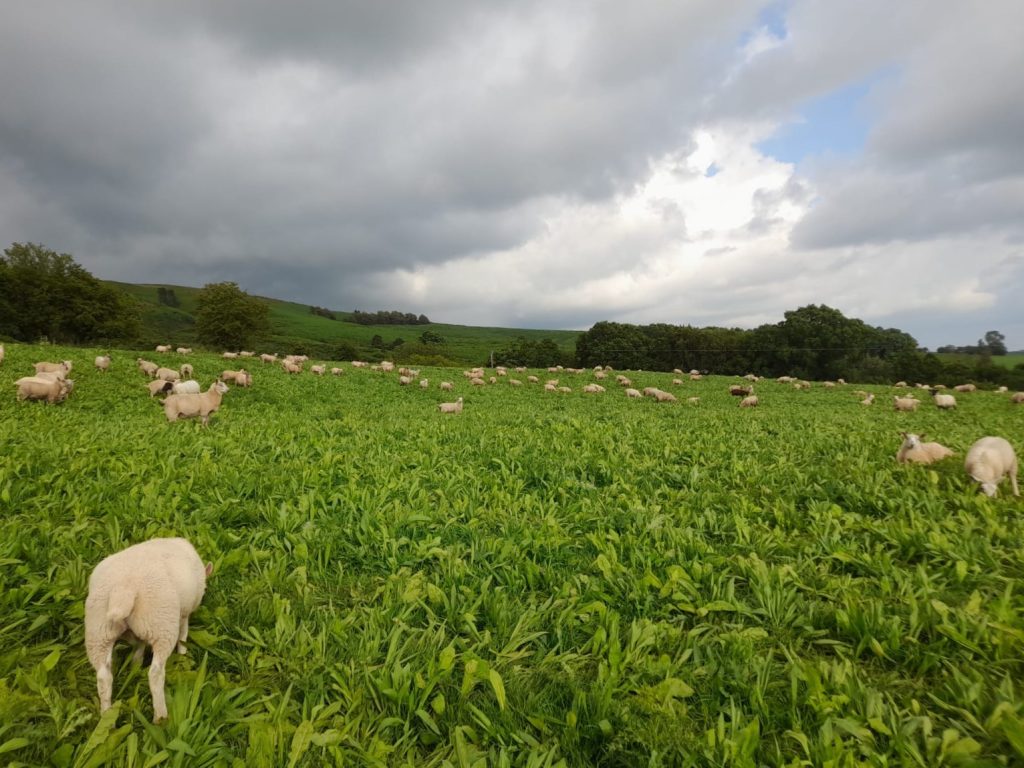
“Covers weren’t quite where we wanted by mid-summer, but rotational grazing helped us keep things moving to recover the ground.”
Matt prefers to use larger grazing mobs to create rest periods that allow swards to rebound and emphasises the importance of allowing for early regrowth.
“It costs good money to grow those first few centimetres of grass,” he says.
“But leave it a week or so and you suddenly have double the growth. Photosynthesis is one free thing in farming!”
Silage variability
Silage yields at Bockleton Court were around 20% down on average, and later-cut material was wetter with Matt estimated only around 16-18% dry matter for October silage.
That wetter forage was fed to cattle outside on kale to maintain intakes, while drier first and second cuts were saved for housed stock and those closer to sale.
When clamps are opened earlier than planned, farmers are looking to stretch rations, or quality is mixed, making every mouthful count becomes the priority.
Dr Richard Wynn, head of technical at Crystalyx, advises farmers to focus on optimising the nutritional value of available feed and forage.
“When silage stocks are tight and quality may be low, making every mouthful count is the key to success,” he says.
“It’s important to balance energy and protein levels while feeding cereals and add structural fibre, like chopped straw or hay to help balance the rumen and avoid triggering sub-acute rumen acidosis.
“When forage quality drops, don’t wait too long to supplement. Acting early can improve forage digestibility and energy intake to maintain performance.”
Body condition
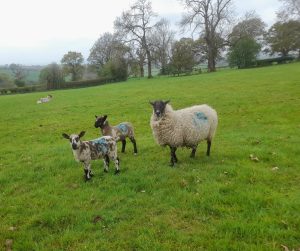
The flock at Bockleton Court lambs in three batches – 1 March, 15 March and 1 April –with most lambing indoors before turnout. Last spring’s warm conditions allowed faster turnout, reducing labour, compared with the previous wet year.
Matt groups ewes according to condition, whether they are lean, mid or fit, so that he can make sure each group gets the nutrition they require.
“If they’re in the right shape, scanning percentages are higher and when it gets to lambing, things tend to go smoother and milk quality is better,” he says.
Scanning rates have risen by around 15% over five years, a factor which Matt links to improved mineral management, supplementation, toxoplasmosis vaccination, and closer monitoring.
Mineral deficiency
Even in a forage-led system, micro nutrition can be the difference between stock thriving, or not.
At Bockleton Court, soil and blood testing showed low levels of:
- Selenium
- Cobalt
- Copper (fluctuating seasonally)
In a wet year, the copper deficiency showed itself more clearly in sheep, with poorer thrift and less performance off grass.
Strategic supplementation – an Extra High Energy pick-up
To combat the deficiencies found in his soil and stock, Matt introduced Crystalyx Extra High-Energy buckets across the farm.
All of his sheep benefit from the buckets and Matt finds them an easy and flexible tool to incorporate into his system.
“In a wet autumn or long winter, if something isn’t quite right, a lick is often the quickest way to pick them up.
“The biggest benefit is condition and consistency,” he says.
“They’re also simpler and quicker than using concentrate bags – you just drop them in the fields when you’re doing checks and it’s job done.
On Matt’s farm, a key time for support is pre-tupping with Extra High Energy buckets being ideal to help get ewes up to their optimum weight, encouraging hormonal balance and strong fertility when the rams are brought in.
Crystalyx Extra High Energy is research-backed and has been proven by Newcastle University and Kansas State University to increase forage intake by 15% and forage digestion by 10%, making it an ideal supplement choice year-round for ewes, rams and lambs.
The product can be used year-round to deliver a full complement of minerals, trace elements and vitamins for a profitable sheep system:
- Pre-tupping and flushing: helping ewes reach optimum body condition and supporting strong fertility
- Throughout pregnancy: maintaining condition, supporting placental development and reducing the risk of twin lamb disease
- At weaning and finishing: enhancing ewe milk production for improved lamb daily weight gain, helping lambs transition off milk, to balance grass and maintain growth rates
Matt’s approach to supplementation is flexible and responsive to the conditions around the farm. Tough seasons result in more supplementation whilst kinder years mean less is needed, making Crystalyx mineral lick buckets an ideal solution.
Control the controllable
Weather and livestock rarely stick to your plan, so resilience tends to come from what you can control: forage utilisation, body condition and nutrition that plugs the gaps quickly.
If your silage is tighter than you would like or quality is inconsistent, using the same principles Matt relies on – keeping forage at the centre, testing, then supplementing strategically – will support stock, protect performance and keep the system moving.
“You’re always striving – weather and livestock never quite do what you expect,” says Matt.
“Taking control of your nutrition, focusing on body condition and making the most of the forage in front of you will give you the best chance of a decent year.”
Matt’s top tips for resilient forage-first performance
- Match the feed to the need
- Avoid overfeeding singles
- Prioritise lean stock
- Use forage strategically across groups
- Cover minerals efficiently
- Use mineral buckets or boluses where needed
- Keep labour practical, especially in wet spells
- Test, don’t guess
- Regular blood and forage testing reveals hidden nutrient gaps
- Manage what is in front of you
- Keep an open mind. Adjust your approach to the conditions, not the calendar